
Operational optimization for small and mid-sized businesses
Less firefighting, more predictability — operations that scale without depending on the owner.
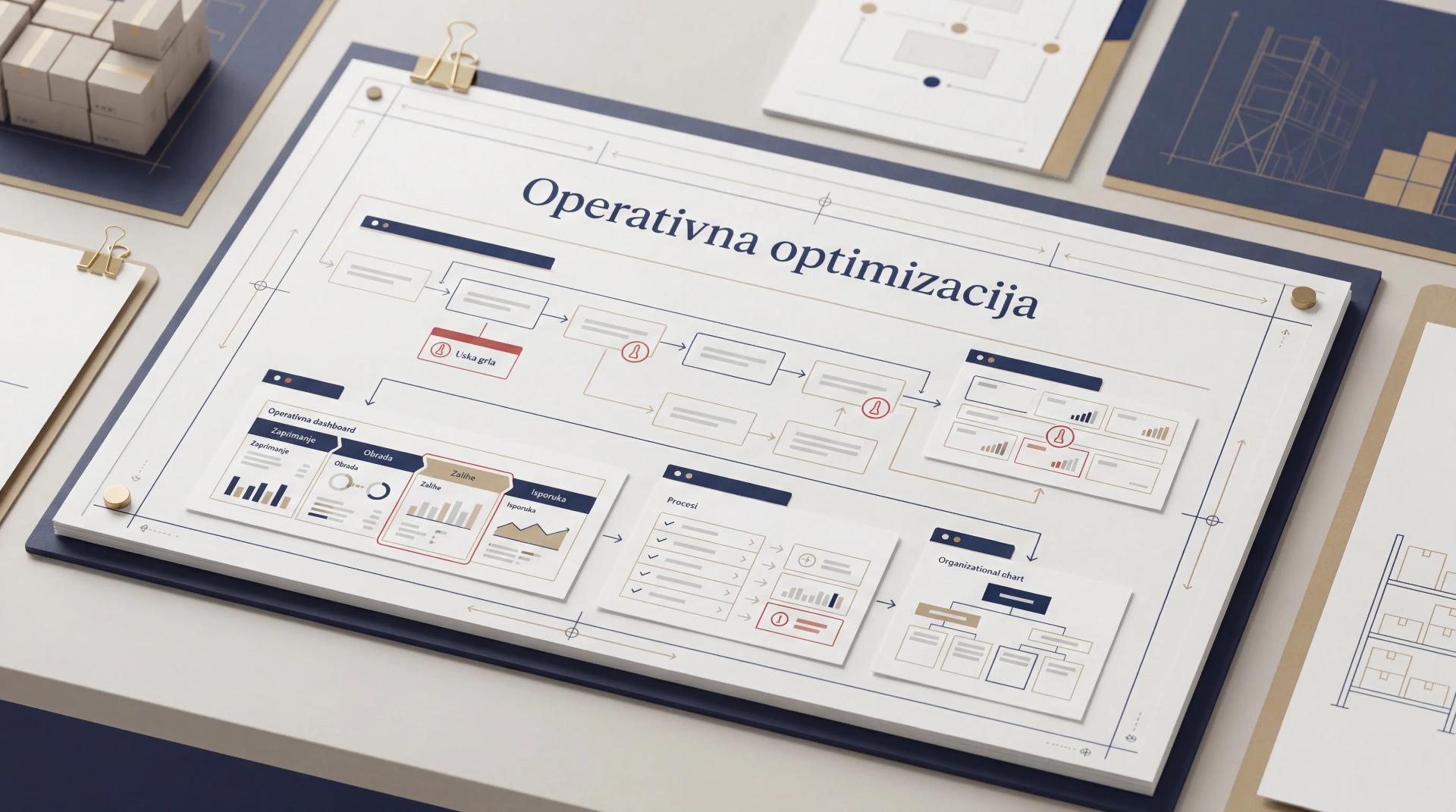
As a business grows, the same processes that worked at 10 orders stop working at 100. Operational optimization finds the few places where the system breaks — and fixes them without heavy new tools nobody uses.
What changes after we work together
- The owner is the bottleneck for every decision.
- Processes live 'in people's heads', not on paper.
- Improvisation grows faster than the business.
- Owner stays out of operations where they aren't needed.
- Processes and responsibilities defined simply and usably.
- A tracking rhythm that can actually be maintained.
When this service makes sense
- Owners of SMEs whose daily operations are overloaded.
- Growing companies where existing processes can no longer carry the volume.
- Owners who want to reduce their own involvement in operations.
- Operations are constant firefighting and every decision lands on the owner.
- Revenue grows but profitability doesn't follow.
- The team works hard but results don't show.
Where profit usually leaks in operations
In most companies profit does not fall because of one big problem — it falls because of several small leaks that repeat every month. These are the most common.
Too much capital tied up in slow-moving stock not aligned with real sales.
Work done by hand every day that should be systemised.
Tasks that belong to everyone end up belonging to no one.
Slipped deadlines that cascade into the next step in the chain.
Expensive, unreliable or irreplaceable partners that block delivery.
A silent cost that is rarely measured and constantly repeats.
Activities that exist 'because they always have' without adding value.
How we work
Operational diagnostic
Process review, bottleneck identification and real measurement of time spent on operations.
Priority interventions
A list of high-impact changes — no large system overhauls.
Implementation
Leading the change in practice, with the team and without disrupting the business.
Operational diagnostic
Process review, bottleneck identification and real measurement of time spent on operations.
Priority interventions
A list of high-impact changes — no large system overhauls.
Implementation
Leading the change in practice, with the team and without disrupting the business.
Concrete outcomes
- Written bottleneck report with quantified impact.
- Prioritized optimization plan.
- Concrete process procedures for 3–5 critical operational areas.
Operational improvement plan
- 01Current state
- 02Bottlenecks
- 03Processes & ownership
- 04Costs & resources
- 05Implementation priorities
- 06KPI tracking
Let's talk about the bottlenecks in your operations
The first conversation is about understanding the situation. No obligation.
The first conversation is informative and without obligation.
Questions clients most often ask before we start working together.